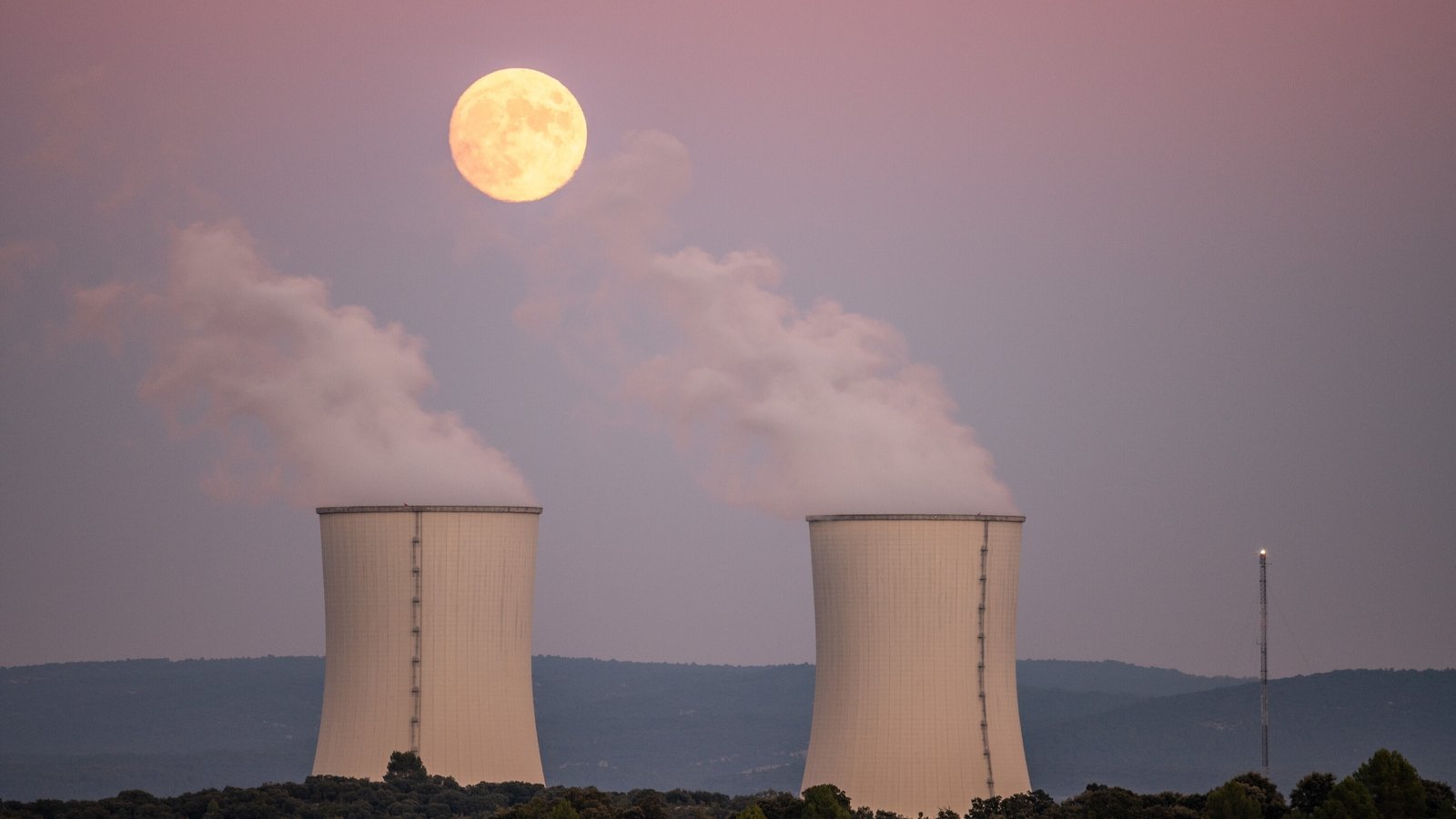
Russia plans to put a nuclear power plant on the moon in the next decade to supply its lunar space programme and a joint Russian-Chinese research station, as major powers rush to explore the earth's only natural satellite.
Reactors on earth are huge and built to run at 100% all the time because that’s the most economical way to do it. That is not a physics requirement, it’s just the most profitable for the current economic environment. You can design a reactor that can throttle output if you need to and many small modular reactors currently in the licensing approval process include this ability.
Nevermind the fact that a “large” RTG only puts out about 100 watts of electricity and it’s nuclear fuel must be bred in reactors beforehand. There is only enough RTG fuel for maybe 20 large units on the planet right now.
You can design a reactor that can throttle output if you need to
yeah i’ve been thinking about these reactors a lot. problem is, to make a reactor regulatable like that, the material must be fissable. I.e. you can’t use PU-238 (which has a half-life of 87 years and is typically used in RTGs today), instead you’d use U-235 or sth (which is used in big nuclear reactors today). Problem is, that material is fissable (i.e. it undergoes chain reaction and runs at or just below criticality) and that is why you can build bombs out of it. Then, to bring such a reactor into space, you’d have to lift it off with a rocket, and there’s your problem: You’d have to transport (large amounts of) fissable material with a rocket across earth into the sky. And that’s how you provoke international nuclear conflict.
Reactor fuel and bomb fuel are very different things. Current reactors use U-235 enriched to between ~2-5% with some of the new SMR designs using fuel enriched to ~20%. Bombs use ~90% enrichment. You can’t make a bomb with less than that enrichment. The physics just don’t work. No one is going to think that your rocket carrying a reactor bound for the moon is secretly a bomb headed to a city.
Also the total amount of fuel you would need for something like a 100MW reactor would be on the order of 100kg. Maybe up to 500kg depending on design. A tiny fraction of a rockets payload. You could easily let international inspectors look at it before launch to ease any fears.
Current reactors use U-235 enriched to between ~2-5% with some of the new SMR designs using fuel enriched to ~20%. Bombs use ~90% enrichment. You can’t make a bomb with less than that enrichment. The physics just don’t work.
What i don’t get, then, is why can nuclear power plants explode at all?
Chernobyl was a steam explosion. Basically due to a poor cost cutting design, and not training the operators in the failure modes introduced by that design, the operators were able to accidentally raise power levels faster than the automatic systems could compensate. This made a ton of heat which flash boiled the cooling water. The resulting high pressure steam blew the top off the sheet metal building. The fuel never exploded, it got hot and melted. Total death count: ~100
Three Mile Island was only a meltdown. A lot of things lined up to go wrong at the same time and the operators didn’t recognize what was happening so they accidentally let the water in the core slowly boil until the fuel was uncovered and started to melt. When the next shift showed up they immediately saw what was wrong and fixed it but by then half the core had melted. (This led to a ton of lessons learned and improvements to equipment, procedures, and training) Total death count: 0
Fukushima was a hydrogen explosion. The plant lost all power from the tsunami and the back up generators were flooded. Eventually the core boiled off its water coolant. High temperature steam interacting with the zirconium cladding on the fuel started to convert into free hydrogen and oxygen and floated to the roof of the containment building. Eventually it found an ignition source and exploded. Total death count: 0 from radiation/explosion. ~50 from the unnecessary evacuation. (Evacuation deaths were mostly from people already in the hospital for other reasons that were then moved several hours away and died on route or shortly after. )
Just something to note, this is the full list of commercial nuclear power disasters. All of them. ~150 dead over ~70 years. Nuclear is by far the safest energy source.


Reactors on earth are huge and built to run at 100% all the time because that’s the most economical way to do it. That is not a physics requirement, it’s just the most profitable for the current economic environment. You can design a reactor that can throttle output if you need to and many small modular reactors currently in the licensing approval process include this ability.
Nevermind the fact that a “large” RTG only puts out about 100 watts of electricity and it’s nuclear fuel must be bred in reactors beforehand. There is only enough RTG fuel for maybe 20 large units on the planet right now.
yeah i’ve been thinking about these reactors a lot. problem is, to make a reactor regulatable like that, the material must be fissable. I.e. you can’t use PU-238 (which has a half-life of 87 years and is typically used in RTGs today), instead you’d use U-235 or sth (which is used in big nuclear reactors today). Problem is, that material is fissable (i.e. it undergoes chain reaction and runs at or just below criticality) and that is why you can build bombs out of it. Then, to bring such a reactor into space, you’d have to lift it off with a rocket, and there’s your problem: You’d have to transport (large amounts of) fissable material with a rocket across earth into the sky. And that’s how you provoke international nuclear conflict.
Reactor fuel and bomb fuel are very different things. Current reactors use U-235 enriched to between ~2-5% with some of the new SMR designs using fuel enriched to ~20%. Bombs use ~90% enrichment. You can’t make a bomb with less than that enrichment. The physics just don’t work. No one is going to think that your rocket carrying a reactor bound for the moon is secretly a bomb headed to a city.
Also the total amount of fuel you would need for something like a 100MW reactor would be on the order of 100kg. Maybe up to 500kg depending on design. A tiny fraction of a rockets payload. You could easily let international inspectors look at it before launch to ease any fears.
What i don’t get, then, is why can nuclear power plants explode at all?
They can’t. Not in a nuclear explosion anyway.
Chernobyl was a steam explosion. Basically due to a poor cost cutting design, and not training the operators in the failure modes introduced by that design, the operators were able to accidentally raise power levels faster than the automatic systems could compensate. This made a ton of heat which flash boiled the cooling water. The resulting high pressure steam blew the top off the sheet metal building. The fuel never exploded, it got hot and melted. Total death count: ~100
Three Mile Island was only a meltdown. A lot of things lined up to go wrong at the same time and the operators didn’t recognize what was happening so they accidentally let the water in the core slowly boil until the fuel was uncovered and started to melt. When the next shift showed up they immediately saw what was wrong and fixed it but by then half the core had melted. (This led to a ton of lessons learned and improvements to equipment, procedures, and training) Total death count: 0
Fukushima was a hydrogen explosion. The plant lost all power from the tsunami and the back up generators were flooded. Eventually the core boiled off its water coolant. High temperature steam interacting with the zirconium cladding on the fuel started to convert into free hydrogen and oxygen and floated to the roof of the containment building. Eventually it found an ignition source and exploded. Total death count: 0 from radiation/explosion. ~50 from the unnecessary evacuation. (Evacuation deaths were mostly from people already in the hospital for other reasons that were then moved several hours away and died on route or shortly after. )
Just something to note, this is the full list of commercial nuclear power disasters. All of them. ~150 dead over ~70 years. Nuclear is by far the safest energy source.
interesting. TIL!