

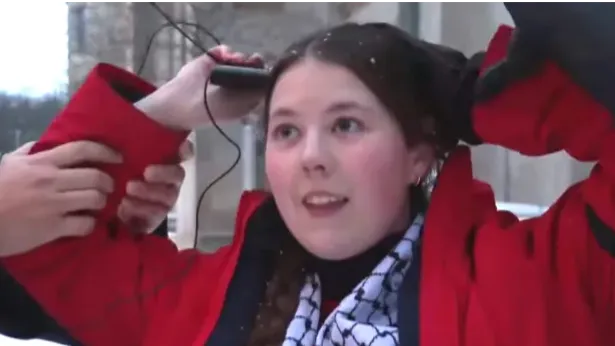
Outrage flooded social media after a video showed an activist being arrested mid-interview at a pro-Venezuela protest, fuelling questions about the state of free speech in the United States.
In the now-viral clip taken from Grand Rapids, Michigan, 22-year-old teacher and activist Jessica Plichta can be heard criticising US foreign policy towards Venezuela, arguing that American involvement abroad is inseparable from domestic accountability.
“This isn’t just a foreign issue,” she said moments before her arrest. “It’s our tax dollars being used to commit war crimes, and it’s the responsibility of the people to resist a Trump administration committing crimes both at home and against people in Venezuela.”
Seconds later, local police move in. As she is escorted to a patrol vehicle, Plichta repeatedly states, “I am not resisting arrest.”
Local outlet WZZM, the city’s ABC affiliate, later reported that police said Plichta was arrested for obstructing a roadway and failing to obey a lawful command. In footage from the scene, an officer tells a bystander that demonstrators had been instructed to relocate their protest to the sidewalk, and alleged that the group instead blocked intersections until the march concluded.
The issue with this line of reasoning, which is correct and the only reasonable way to approach protests, is that protests are sold to participants as if they are actions that do something in the world, because at some point in history, they did. The people attracted by protests are people who want to protest. Even if you attract them into your org, they will still carry that mindset that politics is about words, expression and dissent, rather than power, leverage, change, and impact.
Probably most potential good organizers avoid protests actively because they do understand intuitivelyy they don’t work and why they don’t work.