

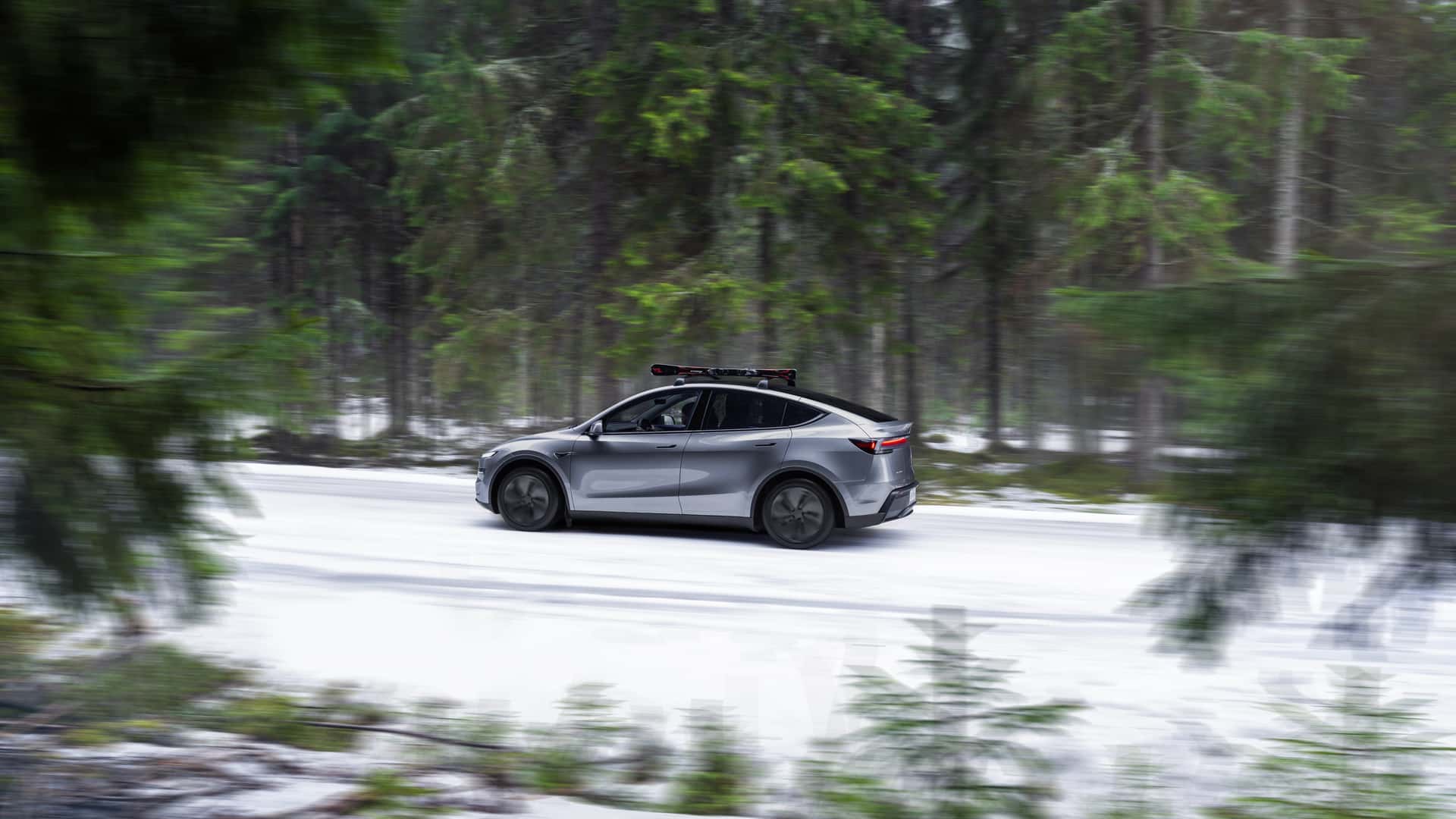
I disagree with “it didn’t go well”. I’d say it went pretty well. Most cars fell 30-40% short of their WLTP ratings. They probably fall 10-20% short of that in summer anyway. And -30DegC is a rare temperature where I live (Scotland). We will see -10DegC occasionally, and it would be pretty bad luck for that to coincide with a long road trip.
As for the winners in this test: seems like the Koreans (EV4, Inster, Musso, not so much Ioniq 9) and MG (6S and IM6) did best. Which is a surprising result for me. It’s the first time I’ve heard of Voyah Courage but it did well also.
The losers? Suzuki, Opel, Volvo and Lucid seemed to fair particularly poorly. The rest is all mid pack.
So they claim the ranges at -30°C are proof that WLTP ranges are „unrealistic“? Given that the WLTP procedure specifies 23°C ambient air temperature, I’d say „no shit Sherlock“…
Seems like some jounalists are still absolutely clueless about EVs.
It’s clickbait.
The majority of the cars traveled well over 300km in these freezing temperatures, which in real-world conditions is more than most people will drive in -30° with no chargers.
Lying about the practicality of extreme temperatures are just another way to discount EVs as reliable transportation.
I suspect that some journalists are payola’d to write negitive things about EVs
Yes, but new battery techs are coming and will show that range will hardly be affected by the cold, unlike current batteries. Will make a big difference in places like Canada that often see -30C.
Clickbait title, but here’s the cold weather range reduction, ordered best to worst (why wouldn’t they sort it that way already?).
Model WLTP range - miles (km) Real-world range - miles (km) Difference MG 6S 301 (485) 214 (345) -29% Hyundai Inster 223 (360) 159 (256) -29% MG IM6 313 (505) 218 (352) -30% KGM Musso 235 (379) 163 (263) -31% Voyah Courage 273 (440) 186 (300) -32% Kia EV4 369 (594) 242 (390) -34% Changan Deepal S05 276 (445) 182 (293) -34% Xpeng X9 348 (560) 224 (361) -36% Mazda 6e 343 (552) 216 (348) -37% Smart #5 335 (540) 212 (342) -37% Audi A6 E-Tron 405 (653) 250 (402) -38% Hyundai Ioniq 9 372 (600) 230 (370) -38% Zeekr 7X 336 (541) 210 (338) -38% Volkswagen ID. Buzz 279 (449 km) 141 (227 km) -38% BMW iX 398 (641) 241 (388) -39% Ford Capri 348 (560) 210 (339) -39% Volvo ES90 387 (624) 231 (373) -40% Tesla Model Y 372 (600) 223 (359) -40% Mercedes-Benz CLA 440 (709) 261 (421) -41% Skoda Elroq 325 (524) 192 (309) -41% Suzuki eVitara 245 (395) 139 (224) -43% Volvo EX90 379 (611) 210 (339) -45% Lucid Air 596 (960) 323 (520) -46% Opel Grandland 300 (484) 162 (262) -46%TIL -30C is “extreme cold”, here that is just called Tuesday.
@lemmy.ca
Yeah that checks out. I’d get excited for sodium batteries if the cold weather performance is even half right.
Sodium and hopefully solid state. If they ever get solid state figured out and affordable, will make every current EV obsolete overnight.
will make every current EV obsolete overnight.
Certainly not. Batteries will be introduced into a few models and slowly gain market share while production is scaled up over a few years. If they’re really that much better, they’ll be in luxury cars first and part of the price tag, slowly working their way down the model palette. If a company patented a crucial technology for manufacturing, they’ll have a monopoly but won’t be able to scale quickly, slowing down adoption further. These things don’t just happen overnight, so current battery types will remain relevant for years, guaranteed.
I’m still fine with my lithium batteries. I still expect to get 250k miles out of it. If for some reason the car outlasts the batteries, I’m gonna look at a better chemistry replacement and a BMS upgrade.