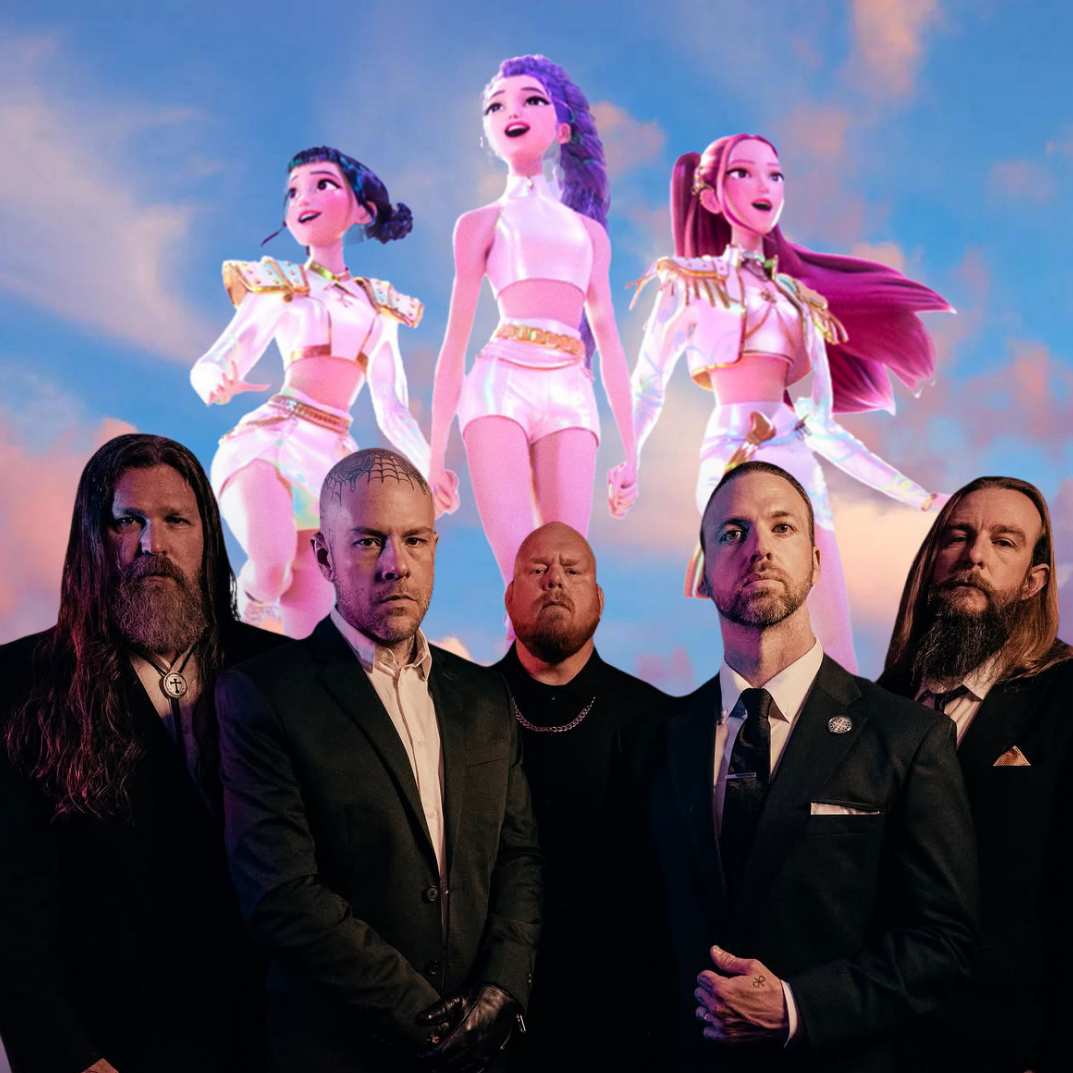
KPop Demon Hunters was a resounding success for Netflix, coming out of nowhere to become the platform’s most-watched movie of all time and spawning several of last year’s biggest pop hits. It was less of a success for Demon Hunter, the Christian metal band that presumably has been getting mogged in the search bar ever…
The thing is a trademark can’t trademark something “generic”.
Like you can’t trademark “chocolate dreams” ans a name for a band… and the go after some one that uses the phrase “chocolate dreams” for an unrelated movie.
Because no one is likely to confuse the band for the movie.
And second, that wasn’t what I was arguing. Nice straw man.
Third, you can’t trademark something after people who have similar names just because they have similar names.
Demon hunter is a metal band.
It’s very unlikely that they lost business because someone wandered into an anime called “Kpop Demon Hunter”… and even if they did, it wasn’t named to trade on the metal band’s name.
Not only do you not know what makes a potential trade mark generic, but you don’t know what a straw man is either …
You’re sort of right about the names, but know of standing in this case has the given name “Demon Hunter”, it’s a band name.
Trade mark is a registered IP right, it doesn’t matter if you intended to infringe it, you can’t trade using someone else’s registered name (in the same field of commerce, and same geographic area).
A straw man fallacy is the informal fallacy of refuting an argument different from the one actually under discussion, while not recognizing or acknowledging the distinction.[1] One who engages in this fallacy is said to be “attacking a straw man”.
My statement:
The thing is a trademark can’t trademark something “generic”.
Like you can’t trademark “chocolate dreams” ans a name for a band… and the go after some one that uses the phrase “chocolate dreams” for an unrelated movie.
Because no one is likely to confuse the band for the movie.
to which they replied:
Generic is not what you think. You’re trying to make the case that all words in the dictionary are generic. I’m sorry you’re just wrong about this.
Which absolutely is not what I was trying to say. So yes. They misrepresented my argument. Are you trying to say they didn’t attack it?
Further… My response to them, which you replied to with out apparently reading.
First off there’s a reason I put it in quotes.
and that reason was because I knew pedantic idiots like you would conflate the word “generic” with with the legal term “generic trademark.” The argument that I’m making is that “demon hunter” is common enough that it’s not particularly specific; and that further, no one is likely to be confused between the two.
And the USPTO agreed- more or less- when they gave netflix a trademark for “KPop Demon Hunter”- because checking for potential conflicts is part of the process.
by ‘generic’ I meant that you can’t trademark something thats generic- Like I can’t open a shop at the State Fair and trademark “turkey legs” because I’m selling shoes that look like turkey feet and then go after the people selling roasted turkey legs.
Does that make sense? they probably would reject that trademark, actually. Or require it be more specific.
Just so you know, they didn’t provide a straw man argument (which is necessarily a weakened position[hence straw]), they provided a statement of fact. Source: degree study in logic and philosophy.
You could respond that you found the fact irrelevant, but it seemed apposite and insightful to me.
I knew pedantic idiots like you would conflate the word “generic” with with the legal term “generic trademark.”
You mean people who know trade mark law would challenge your incorrect use of generic. There’s no such thing as a “generic trademark”, fwiw, though I realise you’re unwilling to learn.
I can’t open a shop at the State Fair and trademark “turkey legs” because I’m selling shoes that look like turkey feet
Yh, you’ve still got it wrong. You 100% can do this, because a trade mark applies in a trading category (except for ‘famous’ marks). So Apple Music can have a trade mark of “Apple” for selling goods in the music category (famously infringed by Apple Computers), etc., but cannot have a trade mark for selling things with the mark Apple that covers fruit sales, say; because “Apple” is not distinctive in that field of industry. Actually applications are in something called a Nice class (though AIUI there is a specific classification USPTO use that is narrower than the international Nice class).
There’s a close example to your “turkey leg” - for 6 years “ham hock” (ie pig leg) was a registered trade mark, https://tmsearch.uspto.gov/search/search-results/77579235. Why was it allowed? Well because it was for a board game, class 028, and so didn’t stop people from selling actual ham hocks.
I’m not 100% on trade marks in USA, but “confusion” in trade mark law usually has a specific test before the law that is not the same as merely requiring that consumers be confused. Like genericisation, confusion does not have its common meaning when discussing trade marks.
Did you read the article? They are now doing a live tour of KPop Demon Hunter" and they have at least one example of there being confusion in the market. AEG and Netflix could have promoted the tour as HUNTR/X: KPop Demon Hunters or something to avoid this. I suspect there will be a settlement as just because there was no confusion when it was just a movie doesn’t mean they can go into live concerts with the same name.
But no, they still haven’t shown trademark infringement. You’re really going to tell me that the metal band lost measurable business because some idiot on the internment couldn’t tell the difference between a kpop musical on Netflix and their metal band.
all because they were either to cheap to pay for SEO or so crappy that paying for SEO still doesn’t matter. (Bet: the settlement includes SEO.)
Sorry. No. That’s not trademark infringement. It’d be like McDonald’s Plumbing suing McDonald’s burgers.
Guess what- these things happen, and they’d have to show that that the decision was intentional and malicious, when the people making the decision probably didn’t even know the metal band existed. That’s not going to happen.
Again, please read the article. The more apt comparison would be if McDonald’s Plumbing started selling and marketing burgers. This is a pretty straightforward case and will likely be settled for a sum that can be found in Netflix’s/AEG’s couch cushions. Also, “maliciousness” is not a factor in determining trademark infringement.
The differences in other branding are sufficient that no one looking at the webpages or whatever they clicked on would be confused. There’s not a likely chance that someone is going to confuse Demon Hunter the Metal Band with KPop Demon Hunter the Anime. And even if they did click the wrong link there’s no real harm. All it really means is that whoever took the wrong link hop needs to work on their google-foo.
I mean. really. look at the difference in branding:
Vs:
The concept of “Demon Hunter” as a thing is something that’s common enough that it’s going to bump into other brands. It’s not like they went after the 2005 movie “Demon Hunter”
and while things may have fallen through the cracks, but when you apply for a trademark the USPTO searches their database to verify that there’s nothing already trademarked that you might be infringing on. given that netflix has a trademark, that search happened in some form and they decided it was acceptable.


The thing is a trademark can’t trademark something “generic”.
Like you can’t trademark “chocolate dreams” ans a name for a band… and the go after some one that uses the phrase “chocolate dreams” for an unrelated movie.
Because no one is likely to confuse the band for the movie.
Generic is not what you think. You’re trying to make the case that all words in the dictionary are generic. I’m sorry you’re just wrong about this.
First off there’s a reason I put it in quotes.
And second, that wasn’t what I was arguing. Nice straw man.
Third, you can’t trademark something after people who have similar names just because they have similar names.
Demon hunter is a metal band.
It’s very unlikely that they lost business because someone wandered into an anime called “Kpop Demon Hunter”… and even if they did, it wasn’t named to trade on the metal band’s name.
Not only do you not know what makes a potential trade mark generic, but you don’t know what a straw man is either …
You’re sort of right about the names, but know of standing in this case has the given name “Demon Hunter”, it’s a band name.
Trade mark is a registered IP right, it doesn’t matter if you intended to infringe it, you can’t trade using someone else’s registered name (in the same field of commerce, and same geographic area).
It’s interesting.
from wikipedia a straw man fallacy is :
My statement:
to which they replied:
Which absolutely is not what I was trying to say. So yes. They misrepresented my argument. Are you trying to say they didn’t attack it?
Further… My response to them, which you replied to with out apparently reading.
and that reason was because I knew pedantic idiots like you would conflate the word “generic” with with the legal term “generic trademark.” The argument that I’m making is that “demon hunter” is common enough that it’s not particularly specific; and that further, no one is likely to be confused between the two.
And the USPTO agreed- more or less- when they gave netflix a trademark for “KPop Demon Hunter”- because checking for potential conflicts is part of the process.
by ‘generic’ I meant that you can’t trademark something thats generic- Like I can’t open a shop at the State Fair and trademark “turkey legs” because I’m selling shoes that look like turkey feet and then go after the people selling roasted turkey legs.
Does that make sense? they probably would reject that trademark, actually. Or require it be more specific.
Just so you know, they didn’t provide a straw man argument (which is necessarily a weakened position[hence straw]), they provided a statement of fact. Source: degree study in logic and philosophy.
You could respond that you found the fact irrelevant, but it seemed apposite and insightful to me.
You mean people who know trade mark law would challenge your incorrect use of generic. There’s no such thing as a “generic trademark”, fwiw, though I realise you’re unwilling to learn.
Yh, you’ve still got it wrong. You 100% can do this, because a trade mark applies in a trading category (except for ‘famous’ marks). So Apple Music can have a trade mark of “Apple” for selling goods in the music category (famously infringed by Apple Computers), etc., but cannot have a trade mark for selling things with the mark Apple that covers fruit sales, say; because “Apple” is not distinctive in that field of industry. Actually applications are in something called a Nice class (though AIUI there is a specific classification USPTO use that is narrower than the international Nice class).
There’s a close example to your “turkey leg” - for 6 years “ham hock” (ie pig leg) was a registered trade mark, https://tmsearch.uspto.gov/search/search-results/77579235. Why was it allowed? Well because it was for a board game, class 028, and so didn’t stop people from selling actual ham hocks.
I’m not 100% on trade marks in USA, but “confusion” in trade mark law usually has a specific test before the law that is not the same as merely requiring that consumers be confused. Like genericisation, confusion does not have its common meaning when discussing trade marks.
Did you read the article? They are now doing a live tour of KPop Demon Hunter" and they have at least one example of there being confusion in the market. AEG and Netflix could have promoted the tour as HUNTR/X: KPop Demon Hunters or something to avoid this. I suspect there will be a settlement as just because there was no confusion when it was just a movie doesn’t mean they can go into live concerts with the same name.
No. I didn’t because I have better things to do.
But no, they still haven’t shown trademark infringement. You’re really going to tell me that the metal band lost measurable business because some idiot on the internment couldn’t tell the difference between a kpop musical on Netflix and their metal band.
all because they were either to cheap to pay for SEO or so crappy that paying for SEO still doesn’t matter. (Bet: the settlement includes SEO.)
Sorry. No. That’s not trademark infringement. It’d be like McDonald’s Plumbing suing McDonald’s burgers.
Guess what- these things happen, and they’d have to show that that the decision was intentional and malicious, when the people making the decision probably didn’t even know the metal band existed. That’s not going to happen.
Again, please read the article. The more apt comparison would be if McDonald’s Plumbing started selling and marketing burgers. This is a pretty straightforward case and will likely be settled for a sum that can be found in Netflix’s/AEG’s couch cushions. Also, “maliciousness” is not a factor in determining trademark infringement.
No it wouldn’t.
Again. Please try and understand what I’m saying.
The differences in other branding are sufficient that no one looking at the webpages or whatever they clicked on would be confused. There’s not a likely chance that someone is going to confuse Demon Hunter the Metal Band with KPop Demon Hunter the Anime. And even if they did click the wrong link there’s no real harm. All it really means is that whoever took the wrong link hop needs to work on their google-foo.
I mean. really. look at the difference in branding:


Vs:
The concept of “Demon Hunter” as a thing is something that’s common enough that it’s going to bump into other brands. It’s not like they went after the 2005 movie “Demon Hunter”
and while things may have fallen through the cracks, but when you apply for a trademark the USPTO searches their database to verify that there’s nothing already trademarked that you might be infringing on. given that netflix has a trademark, that search happened in some form and they decided it was acceptable.