
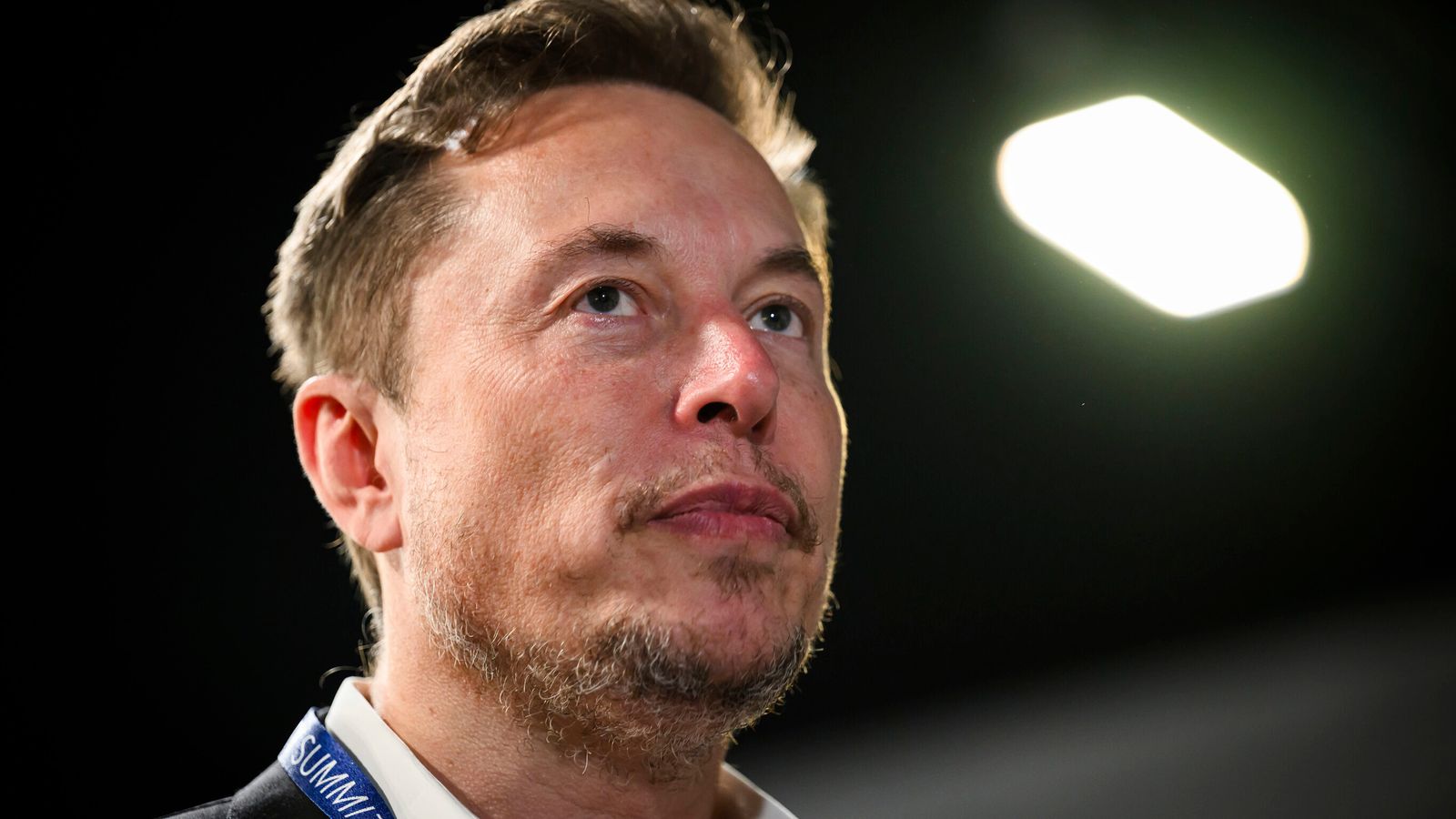
The US firm faced a difficult year with unease over chief executive Elon Musk’s political activities and stiff overseas competition.

  • Rusty Shackleford@programming.dev
    link
    fedilink
    English
    arrow-up
    4
    ·
    edit-2
    3 days ago

    And so many people seem to forget another simple, yet easy to grasp thing:

    Tesla must actually make reliable cars that people want and sell them at a price that enough people can afford.

    Sounds easy, or at least the concept is simple. This is from a quantitative insights company’s outlook about TSLA:

    According to the most recent financial reports and market analysis for January 2026, Tesla is indeed navigating a significant “correction” period. The company has transitioned from the explosive hyper-growth of 2021–2022 into a phase of margin compression, slowing vehicle demand, and a shifting regulatory environment. The following analysis tracks Tesla’s Adjusted EBITDA (the metric most preferred by analysts to gauge core operational health) and the specific factors driving the “trouble” narrative.

    Tesla EBITDA Performance Analysis (2021–2025)

    Year Adjusted EBITDA YoY Growth Key Financial Driver
    2021 $9.43 Billion +120.8% Global Model Y ramp-up; high demand.
    2022 $17.24 Billion +82.7% Peak profitability; record production; low competition.
    2023 $13.56 Billion -21.3% Start of “Price Wars”; aggressive discounts to maintain volume.
    2024 $13.03 Billion -3.9% Stagnating growth; high interest rates hitting auto affordability.
    2025 (Est) $14.50 Billion ~+11% Recovery in Q3/Q4; offset by the loss of regulatory credits.

    Analysis of the “Trouble” Narrative

    While the absolute EBITDA remains high compared to most automakers, the quality of these earnings is under fire for three main reasons:

    1. The “Regulatory Credit” Cliff For years, Tesla relied on selling regulatory credits to rivals like Ford and GM. In Q2 2024, this was still a $890 million revenue stream. However, by late 2025, this “pure profit” effectively vanished. Under the “Big Beautiful Bill” passed in mid-2025, the US government ended emission penalty enforcement, destroying the market for these credits almost overnight.
    • Impact: A ~$2.5 billion annual hole in Tesla’s high-margin revenue.
    1. Eroding EBITDA Margins Tesla’s EBITDA margin—a key measure of efficiency—has dropped from a peak of 23.9% (Q1 2022) to a steady 15.0% (Q3 2025). The company is now spending significantly more on CapEx (billions on H100 GPU clusters and AI R&D) while earning less per vehicle sold due to global competition from BYD and others.
    2. Stagnating Delivery Growth 2025 marked the first time Tesla faced serious “demand saturation.” Q1 2025 deliveries were only 323,800 units, a 13% decline year-over-year. While sales recovered in the latter half of the year, the “50% annual growth” promise is considered permanently over by most institutional analysts. Enumerated Sources The data provided in this analysis is synthesized from the following primary and secondary financial records:
    • Tesla Investor Relations (IR): Q3 2025 Update, Q4 2024 Financial Summary, and Q4 2023 Financial Summary. These provide the definitive Adjusted EBITDA and delivery figures.
    • Macrotrends: Tesla EBITDA 2012–2025 Charting. Used for historical year-over-year percentage comparisons and GAAP vs. Non-GAAP reconciliations.
    • Finbox Financial Intelligence: EBITDA Margin for Tesla Inc (TSLA). Used to benchmark Tesla’s 11.3%–15% margins against the broader Consumer Discretionary sector.
    • Electrek / Nasdaq: “Tesla’s Regulatory Credit Cash Cow Is Fading Fast” (August 2025) and “US Officially Ends Emission Credits” (August 2025). These detail the legislative impact on Tesla’s ancillary revenue.
    • IG / Bloomberg Financial: Tesla Q1 2025 Earnings Preview. Used for analysis of the “weakest delivery performance in three years” recorded in early 2025. Would you like me to analyze how Tesla’s “Energy Generation and Storage” segment performed in late 2025 to see if it is successfully replacing the lost automotive revenue?