Sustainable energy is the key to making the Aircela machine practical and cost-effective. Running it on the grid from coal or natural gas power plants defeats the purpose of removing carbon from the air, and the electricity will cost more, too.
The company themselves even state that this is supposed to be driven by solar/wind, otherwise it makes no sense. This is regular PtX but in SFF for modular small scale deployment.
It treats sustainable energy dedicated to this purpose as “free”, ignoring the opportunity cost of using that energy directly.
For example, let’s say I dedicated my solar exclusively to making gasoline. I could get about 14 gallons a month of “free” gasoline… Except my home power bill would go up about 150 dollars a month… opportunity cost would be over 10 dollars a gallon…
Sure, for a homeowner it doesn’t make sense. But what about at grid scale when there isn’t enough demand for that electricity?
What opportunity cost is there to NOT do it when the power would otherwise be wasted or generation capacity reduced? If anything, I’d say the opportunity cost is of not doing this with over generation on the grid/plant
How much do we have an over generation problem in general though? I suppose the argument would be that solar is curtailed because they don’t want to deal with the potential for overgeneration, but we already have a number of approaches for energy storage. Their pricing for generating at most a gallon a day is a price exceeding a battery system of LFP that could do a lot more than a gallon of gas. This is ignoring the rather significant potential of Sodium batteries.
So this doesn’t look to be cheaper than battery systems, it looks to be way less efficient than battery systems. The biggest use case as energy storage in general seems to be if you want it to spend a few months (but not too many months, fuel degrades in the tank after all). The more narrow use case is to cater to scenarios where you absolutely need the energy density of gasoline, so boats and airplanes critically so, maybe some heavy equipment. I’ll grant that, but if particularly sodium batteries will be an acceptable approach, it’ll be better than this solution in that very wide variety of circumstances.
Over generation is very big. I agree batteries are better, though.
We need to be able to support peak winter heating and peak summer cooling and we need to do that with excess margin.
Everything in between we have excess power, unless it’s something like hydro dams which are easy to control and aren’t a big extra cost and part of how they naturally operate.
We generally use gas peaker plants to help which we can turn off or on, but it’s more efficient to not do that, and those are expensive.
It would also make it easier to build big nuclear plants if we could manage the off peak load into batteries for the day.
Carbon dioxide needs to be captured were there is a lot of carbon dioxide in the air. So especially around cities with lots of car traffic, or around fossil fuel power plants…
So… It would be better to stop car traffic and fossil fuel power plants first, before doing carbon capture. And the purpose of that should be, making the air cleaner. And putting that carbon back into a less environmental damaging state.
CO2 doesn’t vary much in concentration by how close you are to an emission source unless you are literally sucking air out of a tailpipe. You might get a 10-20% increase in the centre of a city instead of the countryside, hardly enough to make up for being somewhere with so much energy coming in that they frequently have to curtail it (which could then be used for this instead).
This isnt CCS which cheaply turns CO2 into an inert form of carbon, its an expensive process for turning CO2 into a very useful form.
Sort of. Wind is very good at stirring things up, but you can still see differences in places where there are a lot of plants (1-2%). This things needs CO2 to function and that means it needs concentration so the more CO2 to start with the better.
Fortunately this is small and electric is something we already move to cities in large quantities. Putting it in a city makes sense - assuming it works and is safe of course.


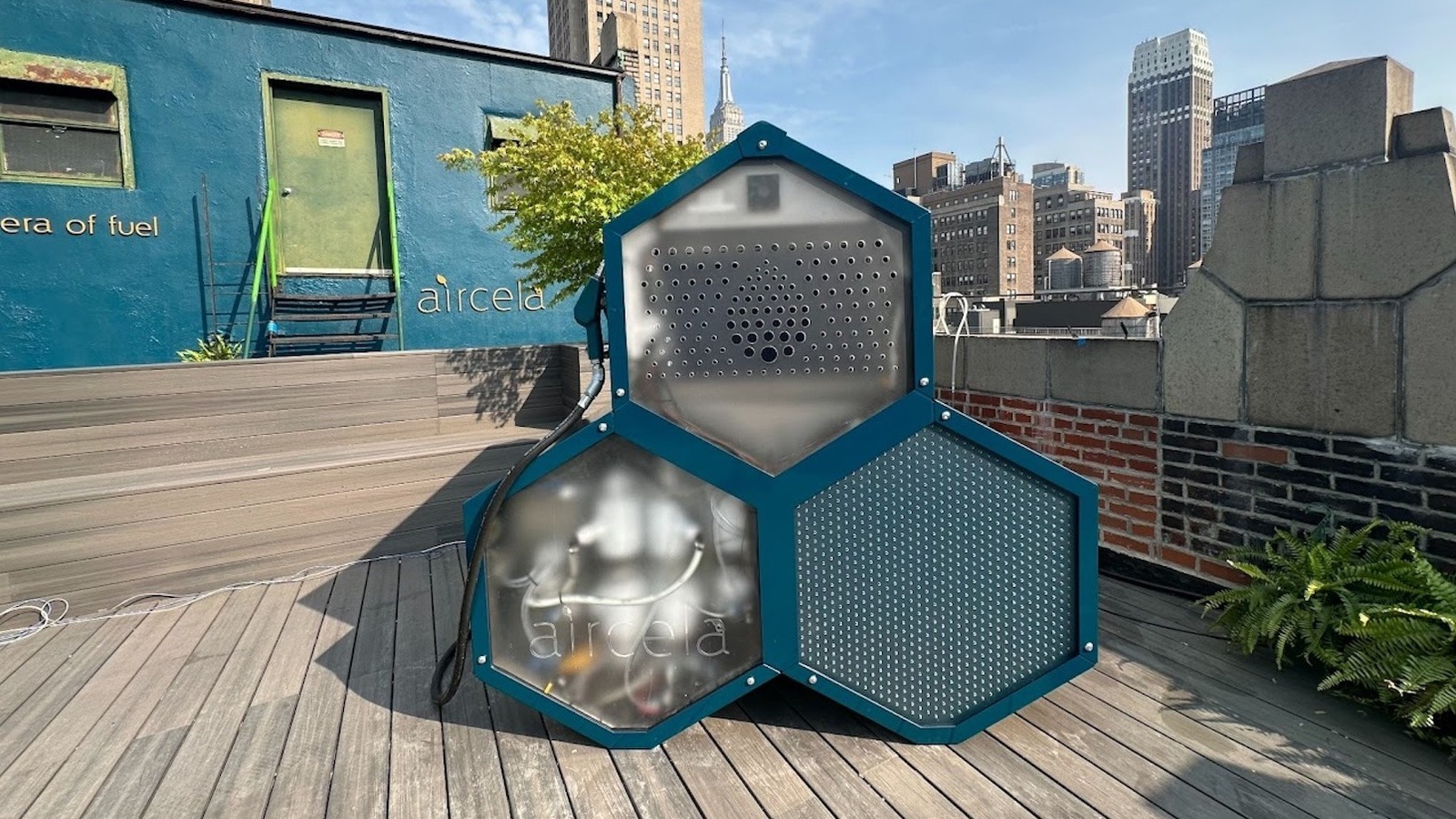
The company themselves even state that this is supposed to be driven by solar/wind, otherwise it makes no sense. This is regular PtX but in SFF for modular small scale deployment.
Even then, the value prop is questionable.
It treats sustainable energy dedicated to this purpose as “free”, ignoring the opportunity cost of using that energy directly.
For example, let’s say I dedicated my solar exclusively to making gasoline. I could get about 14 gallons a month of “free” gasoline… Except my home power bill would go up about 150 dollars a month… opportunity cost would be over 10 dollars a gallon…
Sure, for a homeowner it doesn’t make sense. But what about at grid scale when there isn’t enough demand for that electricity?
What opportunity cost is there to NOT do it when the power would otherwise be wasted or generation capacity reduced? If anything, I’d say the opportunity cost is of not doing this with over generation on the grid/plant
How much do we have an over generation problem in general though? I suppose the argument would be that solar is curtailed because they don’t want to deal with the potential for overgeneration, but we already have a number of approaches for energy storage. Their pricing for generating at most a gallon a day is a price exceeding a battery system of LFP that could do a lot more than a gallon of gas. This is ignoring the rather significant potential of Sodium batteries.
So this doesn’t look to be cheaper than battery systems, it looks to be way less efficient than battery systems. The biggest use case as energy storage in general seems to be if you want it to spend a few months (but not too many months, fuel degrades in the tank after all). The more narrow use case is to cater to scenarios where you absolutely need the energy density of gasoline, so boats and airplanes critically so, maybe some heavy equipment. I’ll grant that, but if particularly sodium batteries will be an acceptable approach, it’ll be better than this solution in that very wide variety of circumstances.
Over generation is very big. I agree batteries are better, though.
We need to be able to support peak winter heating and peak summer cooling and we need to do that with excess margin.
Everything in between we have excess power, unless it’s something like hydro dams which are easy to control and aren’t a big extra cost and part of how they naturally operate.
We generally use gas peaker plants to help which we can turn off or on, but it’s more efficient to not do that, and those are expensive.
It would also make it easier to build big nuclear plants if we could manage the off peak load into batteries for the day.
Yeah, put these in Iceland, Scotland or the Sahara where there’s virtually unlimited zero-carbon power available and they make a world of sense.
I didn’t know the machine needed no maintenance and that its own life cycle was carbon neutral. TIL/s
Carbon dioxide needs to be captured were there is a lot of carbon dioxide in the air. So especially around cities with lots of car traffic, or around fossil fuel power plants…
So… It would be better to stop car traffic and fossil fuel power plants first, before doing carbon capture. And the purpose of that should be, making the air cleaner. And putting that carbon back into a less environmental damaging state.
They could route emissions through a system like this directly from smoke stacks, capturing the carbon before it even reaches the atmosphere
CO2 doesn’t vary much in concentration by how close you are to an emission source unless you are literally sucking air out of a tailpipe. You might get a 10-20% increase in the centre of a city instead of the countryside, hardly enough to make up for being somewhere with so much energy coming in that they frequently have to curtail it (which could then be used for this instead).
This isnt CCS which cheaply turns CO2 into an inert form of carbon, its an expensive process for turning CO2 into a very useful form.
Sort of. Wind is very good at stirring things up, but you can still see differences in places where there are a lot of plants (1-2%). This things needs CO2 to function and that means it needs concentration so the more CO2 to start with the better.
Fortunately this is small and electric is something we already move to cities in large quantities. Putting it in a city makes sense - assuming it works and is safe of course.