I don’t need to run 2 containers and >10GB. I could just install and run in 10 seconds.
My whole library and metadata is self contained in a single dir. On a fresh OS install I could simply point Calibre to the dir, and off we go.
A rich plugin ecosystem, including deDRM plugins.
I can just ignore the AI stuff (for now, at least)
I’ve used it for close to 2 decades. Familiarity is definitely a factor. And yes, it’s still as ugly as it was 20 years ago. But once you’ve set your workflow up, the UI just kinda melds to the background.
I use an older version of Calibre that has a fairly robust plug-in to remove DRM. I use it to remove DRM from all my ebook purchases. That plug-in isn’t supported in newer versions of Calibre so I don’t upgrade.
I simply use both. New book comes in, add to Calibre to get most metadata down pat and move to my library, then gets imported into Booklore where I can easily make minor changes/fixes and that’s it. I use Booklore for reading across many of my devices.
You could get rid of Calibre in my stack, I just find it nice for local management on my host PC.
Not the OP you asked, but I back his comment fully. At this point, I don’t even know how long it has been that I have used calibre. I started when I bought a Chinese e-reader back in the day when it was that or the first kindle that had a full keyboard.
At this point, after so long, for me ebooks go hand in hand with calibre. Why choose calibre instead of that alternative? Habits probably, the fact that calibre has filled that role since I ever used a screen to read. I don’t particularly think there’s any other reason. Back in the day when the formats of ebooks were all over the place, the conversion abilities of calibre were priceless. Now everything seems to be epub or cbz for comics. The transfer to the reader was also a breeze with calibre, now with WiFi in every device it doesn’t feel so relevant. Not to mean calibre doesn’t help, it has moved with the times allowing remote direct connection with the readers and so on.
I use Calibre because I already know it, it is open source, and it has proven to work extremely well over all these years. It can be trusted.
But now with all that said, why I wouldn’t use calibre. Calibre comes with its own web server but sincerely it is sooo limited i just can’t stand it. I know there’s calibre-web but I haven’t gotten around to set it up. Plus it doesn’t get along well with calibre itself running if I have understood correctly. It seems where calibre is lacking is in the editing of a library from multiple sources. So its main use seems to be meant on one computer and… That’s it. Now that I am setting some self hosted services, I wanted something similar for calibre. Many times I want to edit the library from my phone when I want to add something I found or whatever. But I appreciate having the full app on my computer to do big complex operations on my libraries. But I’ve never loomed for an alternative, why would I, calibre is incredible… Well, maybe I should. Thanks for that link! It looks promising!


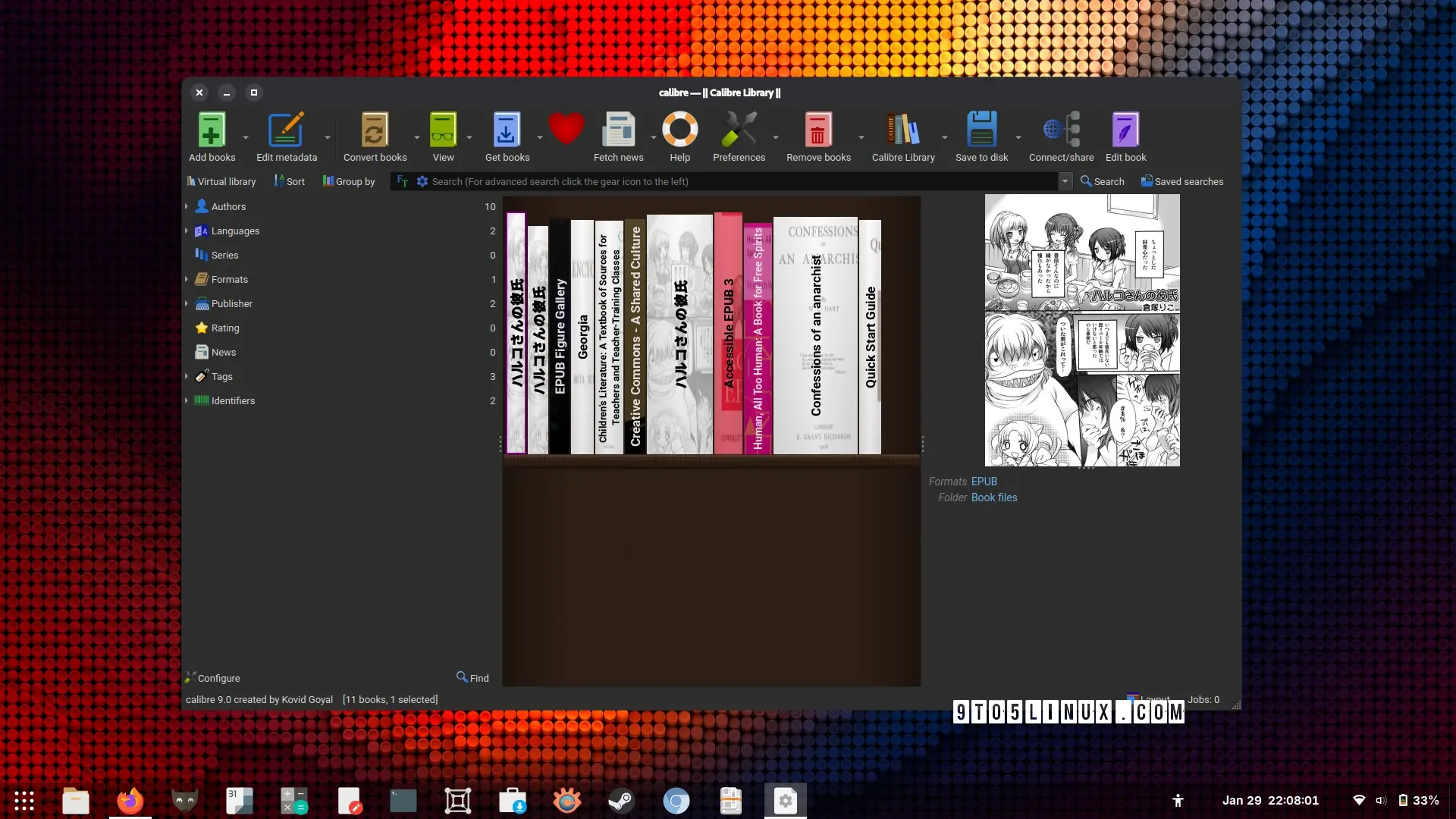
I was planning on setting this up soon, but I heard they’ve been incorporating AI into it. Any reason you’d choose Calibre over Booklore?
Personally, a few reasons.
I use an older version of Calibre that has a fairly robust plug-in to remove DRM. I use it to remove DRM from all my ebook purchases. That plug-in isn’t supported in newer versions of Calibre so I don’t upgrade.
I simply use both. New book comes in, add to Calibre to get most metadata down pat and move to my library, then gets imported into Booklore where I can easily make minor changes/fixes and that’s it. I use Booklore for reading across many of my devices.
You could get rid of Calibre in my stack, I just find it nice for local management on my host PC.
Not the OP you asked, but I back his comment fully. At this point, I don’t even know how long it has been that I have used calibre. I started when I bought a Chinese e-reader back in the day when it was that or the first kindle that had a full keyboard.
At this point, after so long, for me ebooks go hand in hand with calibre. Why choose calibre instead of that alternative? Habits probably, the fact that calibre has filled that role since I ever used a screen to read. I don’t particularly think there’s any other reason. Back in the day when the formats of ebooks were all over the place, the conversion abilities of calibre were priceless. Now everything seems to be epub or cbz for comics. The transfer to the reader was also a breeze with calibre, now with WiFi in every device it doesn’t feel so relevant. Not to mean calibre doesn’t help, it has moved with the times allowing remote direct connection with the readers and so on.
I use Calibre because I already know it, it is open source, and it has proven to work extremely well over all these years. It can be trusted.
But now with all that said, why I wouldn’t use calibre. Calibre comes with its own web server but sincerely it is sooo limited i just can’t stand it. I know there’s calibre-web but I haven’t gotten around to set it up. Plus it doesn’t get along well with calibre itself running if I have understood correctly. It seems where calibre is lacking is in the editing of a library from multiple sources. So its main use seems to be meant on one computer and… That’s it. Now that I am setting some self hosted services, I wanted something similar for calibre. Many times I want to edit the library from my phone when I want to add something I found or whatever. But I appreciate having the full app on my computer to do big complex operations on my libraries. But I’ve never loomed for an alternative, why would I, calibre is incredible… Well, maybe I should. Thanks for that link! It looks promising!
There’s a fork of Calibre to remove the AI stuff : https://codeberg.org/rereading/arcalibre
https://rereading.space/arcalibre/