

- cross-posted to:
- [email protected]
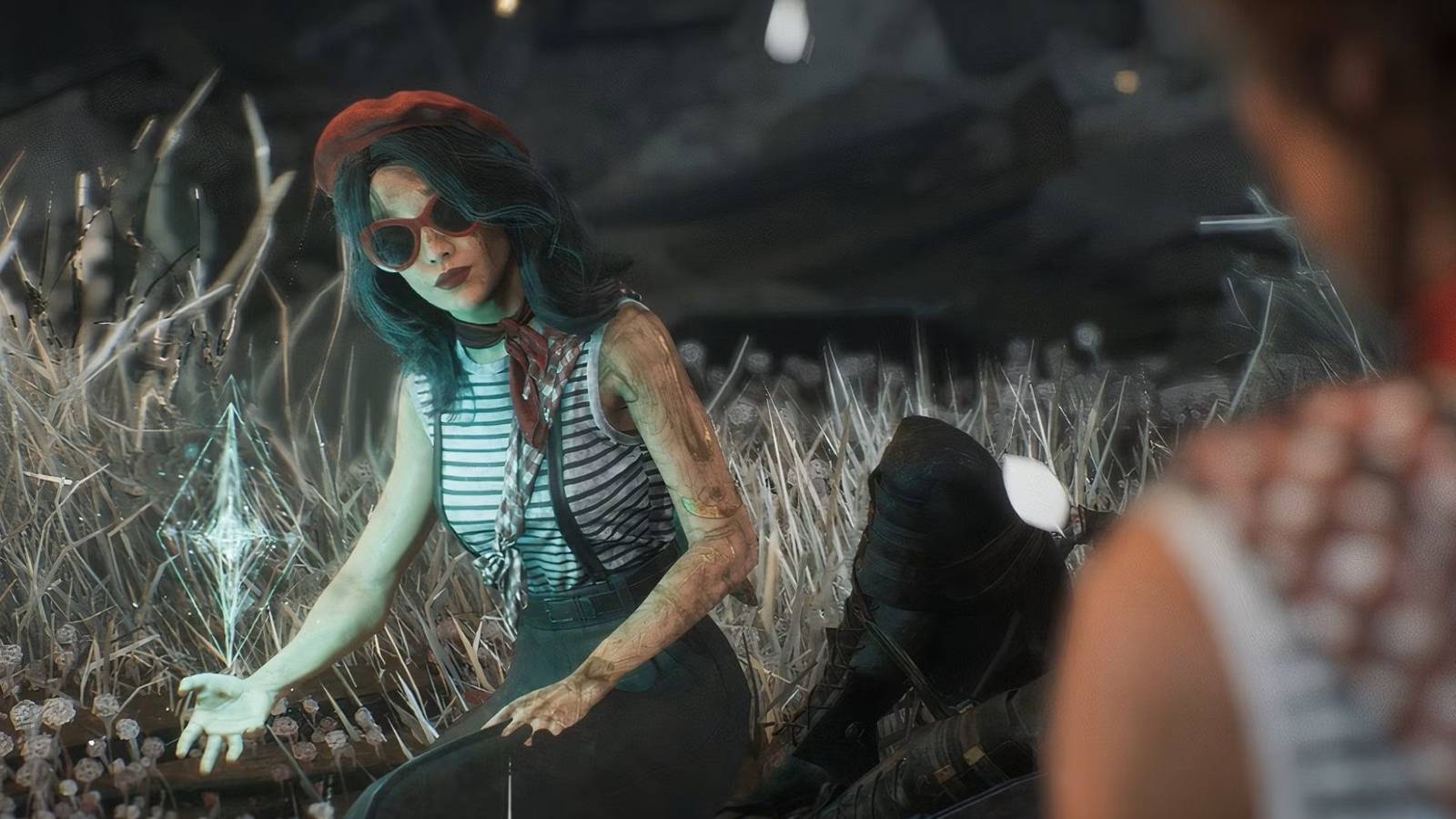
The gaming world appeared ablaze after the Indie Game Awards announced that it was rescinding the top honors awarded to RPG darling Clair Obscur: Expedition 33 due to the use of generative AI during development. Sandfall Interactive recently sat down with a group of influencers for a private interview session, where the French studio was probed about recent AI controversies. Game director Guillaume Broche clarified some of the misinformation surrounding the studio and reiterated what other Sandfall developers have said about generative AI usage during interviews held earlier in the year.
Transcription of the Q&A comes courtesy of gaming content creator Sushi, who was one of the handful of influencers who were present at the session. Twitch streamer crizco prefaced his question by recounting the storm surrounding Baldur’s Gate 3 developer Larian Studios’ admission about using generative AI during game development.
So if I’m reading it right they basically just tried it out and then decided to not use it, removing anything that used it? I can see how technically that it ‘was used at all in development’, but also seems a lil silly to pull the awards based on it.
They probably should have clarified how they used it a lot earlier, but I also don’t blame them for trying out a new tool.
The game was released with AI assets. The rules required disclosure, and they failed to properly disclose. Whether this was on purpose or by accident, they were disqualified quite fairly. It’s a shame, but fairness must apply equally to all studios.
This is where I am confused. I hear this, but I also keep hearing they used AI to create assets when it was first started development as placeholders for future assets. They were all replaced long before the game was ever released. I also heard that the assets used were stock unreal 5 assets which were AI generated but again replaced later long before the game released. So which is the real story?
They used them as placeholders, they may or may not have been stock ue5 assets, which is another problem altogether. But a few of them were left in game at release, presumably by accident since they were removed 5 days post launch. The game did release with AI assets, even if mistakenly.
Given the test, release and publishing timelines, the 5 days patch was already being actively worked on before the game was released. Had it be a few positions higher on the backlog, nobody would have known.
If this is against Indie GA, then for sure drop the award, but that makes me value less the IGA than the game.
The AI assets were only patched out at day 5 because fans noticed them. The devs likely rolled it into that patch because of the fans catching it in the live game.
The issue at hand, as the article above goes into, is that the devs said that they used no AI at all in developement, which is a condition of the award. They did however, as these assets and the devs themselves comfirmed in various interviews. They lied or at least misled the Indie game awards and violated its conditions.
Revoking the award seems like a pretty reasonable response on the IGA’s part. The game itself can still be a masterpiece, but not one eligble for this award.
It was released with the original placeholder AI assets, but patched out within 5 days. It’s pretty clear that they just missed replacing those assets prior to release.
I don’t know exactly which assets, or exactly how many… but from several article it seems one of them was a newspaper only used in the prologue, that no one would notice without directly looking at it up close, which 99.9% of people would never do, and could easily be overlooked doing final testing for game breaking issues prior to release.
And the failure to properly disclose could easily be explained by them messing around. Early in development, deciding not to use AI, and then forgetting about it. Which also explains it being left in for release accidentally. Updated assets were clearly made, just never replaced.
The disqualification had nothing to do with the assets being there for the release, it was solely about development as mentioned in every statement from the awards. Meaning even if it hadn’t been there at release, they still would have been disqualified. Hard criteria like that which disqualifies any sort of context or consideration is not fair. Especially when we’re talking about cutting edge technologies that teams will obviously be experimenting with before making decisions.
They used it to create placeholders during development. It wasn’t something they decided not to use before. It’s just something that was meant to be replaced. Usually these placeholders are a missing texture image or just a magenta texture, but they used generative AI to create something that fit into the world. Because it fit they forgot to replace it.
Honestly, I’m not opposed to this usage. It’s not like it’s replacing an artist. No one was going to create a placeholder to be replaced. However, it is obvious to see that occasionally you’ll forget to replace items with this technique, like we saw here. The old style of incredibly obvious placeholders were used for a reason; so that you can’t forget to replace them. It’s probably smart to keep doing this.
I agree with almost everything here, I think using LLMs to generate placeholders is fair game and allows studios to nail down the feeling of the game sooner. That being said there’s one thing I disagree:
There are ways to ensure you don’t forget, things like naming your placeholders placeholder_<name> or whatever so you ensure there are no more placeholders when you make the final build. That is the best way to approach this because even extremely obvious placeholders might be missed otherwise, since even if you have a full QA team they won’t be playing every little scene from the game daily looking for that, and a few blank/pink/checkered textures on small or weird areas might be missed.
I think it’s okay for studios to use generative AI for placeholders, but if one of them makes it to the release you screwed up big time. And like I said there are ways to ensure you don’t, it’s trivial to make a plugin for any of the major engines (and should be even easier if you’re building the engine yourself) where it would alert you of placeholders in use at compile time.
I don’t disagree that there are ways to add protections. It’d require strict compliance still though or things could fall through the cracks. Even when using the classic placeholders things have been missed on occasion. The only 100% reliable way to avoid shipping any generative AI content is to never include it in the project.
Again, I don’t think the usage here was bad. I think the reaction to one piece of generative AI art, which was replaced within a week, has been too severe. I’m just saying that if you really want to make sure you don’t ship any of it, just don’t ever include any. The old methods were perfectly fine, even if they made development look less pretty.
That’s just ridiculous standards when you apply them to a small team doing their best to pump out a unique piece of art. Yeah sure you can add a million processes to avoid inconsequential things like that but that’s time you can’t spend on making a good game. Zero value except for appeasing superstitious busybodies…
Dude, naming the textures placeholder_<name> doesn’t take any more time and ensures you won’t ship a game with a placeholder. This is, or at least should be, common practice even without using LLMs, and only takes a couple of seconds, not enough to cause any inconvenience.
Every process can be theoretically simple but they never have zero impact. So you come up with this process and some other guy comes up with another, there’s an infinity of things that are simple and quick. Imagine the uber-crunch a small team needs to go through to produce an AA title. It’s just cruel to just come up after the fact and be like “oh yeah you could have done this and that on top of your actual work, it would have added zero quality to the finished product but it’s oh so important to a few people”.
Like… When will gamers ever respect workers giving it their all? They’re just human ffs.
The solution I’m talking about should already be the standard by most devs (especially small studios), even before LLM was a thing. See, small teams can’t afford QA, at least not to the same extent as big studis, so they need to add checks to stuff in a way that catches large problems, and a placeholder making it into the final game is a big problem. Even before generated images were a thing devs would just use any random image they had that more or less worked, and those images could have copyright or be problematic in any other way, so ensuring none of that made it into the final release has always been important.
I mean, it’s a completely reasonable habit that prevents issues of this kind, i’m not disputing that. It’s part of a million little discipline things that will make your life better for an insignificant cost. But it’s also not a big deal and if you start caring about that then you should also care about all the other things that “should already be the standard by most devs”. And then where will you find the time and energy to punch above your weight class and release a masterpiece ? When you engage in that sort of task, you always have to neglect stuff that “should be the standard”. It’s cool and people should be cool about it IMO. Nobody’s gonna love you for being super rigorous about your file naming schemes and never being lazy, they’ll love you cause you have good ideas and work them hard.
I don’t find it nice when the internet is always back-seating every little aspect of what creators do, and being super demanding as if they were a mega corp with infinite resource and not a small group of every day people trying their really best to push out something great in a reasonable time-frame while not burning out. Maybe that’s not what you’re doing, man, it’s just one of my pet peeves.
The argument is one of craft, discipline, and rigor at a certain point.
This is just sloppy craftsmanship.
You either take your craft seriously or it’s just commodity. You eventually have to lean into one over the other.
Except that they used the placeholder AI textures so that they would have a functional build to test on. They didn’t just try it and decide it didn’t work. They literally used it produce part of the rough draft and even shipped the game with some of those placeholder textures accidentally still in there. It was actively used in this instance to “do work”.
It wasn’t “well let me see what this looks like… No that’s all wrong… Nevermind”. It was “well let’s get this AI to make some placeholders so we can continue working on this and we’ll slap the real textures in later”. Literally removing work from a human(concept artist), which is the complaint of anti-AI people. Funny enough, I’m pro-AI and even I’m agreeing with the anti-AI people here. You want a “no AI was used” award? Then don’t ever use AI. Simple.
That’s not what a concept artist does, concept artists (if they had one) did the work before, game artists are still doing the work while the generated placeholders are in place, no person’s job was compromised by using generated placeholders. That being said, if any placeholder made it into the final game then fuck them.
We’re not talking about a development team of 100+ artists here and a company forcing them to work 80 hour crunch weeks leading up to launch like much of the industry.
I don’t know exactly how their 30 or so team members break down for specialties, but I’m willing to bet we’re talking maybe 5 asset artists. Making the tens or hundreds of thousands of concept art pieces, and in game assets. Their time is finite and much better spent working on final assets than making placeholders that will just be replaced later. Experimenting with AI and dripping a placeholder in during month 6 that never gets touched again, and the final asset is made but missed when swapping them in at the end of development isn’t exactly damning
It’s not really “removing” work from a human, it’s utilizing the time of a very small and limited team more wisely. The AI didn’t replace a human, there was never going to be an additional person hired just to make that placeholder, at worst it just let the existing artists spend more time making final assets.
It is exactly replacing work. Your argument is easy to extend to teams of one solo developer who has finite time and money and it’s easy to see the appeal of AI in general.
I’m also in the AI isn’t that bad camp but it’s pretty clear here they used AI, and rightfully disqualified.
Exactly this. I’m not making a moral judgement, just a logical one. They used AI, thus don’t qualify. Feel free to debate whether that award should be that way, but that’s how it is right now.
Ah gotcha, article is just written poorly then.
Dude, it was 2022. AI was nothing back then. Certainly not something that people were debating the morality of at the time. It was a new tool. A developer tried it out for a few very minor assets that were only meant to be placeholders. This was’t “literally removing work from a human(concept artist)”. FFS, it probably was the concept artist who used it!
Like imagine a new type of paint comes out that’s supposed to spread on canvas better. An artist gets some and tries a few test strokes on a blank canvas, goes “huh, interesting”, and then paints over it entirely with traditional paint. Then, the public turns against the new paint. Maybe it’s made from orphan blood, maybe it causes cancer; it doesn’t matter why, but it is now heavily frowned upon to use it. An art studio displaying the original artists work puts out a claim that none of their art uses the new type of paint. Were they lying? Like, ya technically I guess, but if you can’t see the nuance and understand how such a thing could happen, then your logic is less that of a human, and more that of a machine.
And they lied about it on the award application, but yes.
i can see how this would happen though: marketing team simplistically asks about AI assets, dev team says no because it’s not in the final product that they’re aware of, and that miscommunication is exactly that: neither team is trying to be dishonest, it’s just that some information got lost along the way
their award should have been rescinded for sure
but also that shouldn’t tarnish the reputation of the studio going forward as long as they apologise and it was legitimately internal miscommunication rather than an attempt to deceive
This. I don’t think they lied. Thay made an honest mistake. But you can’t reward them for that. It’s not fair to those who didn’t make the mistake.
My understanding is that these were also standard placeholder textures from unreal development.
But did you consider “ai bad” and “nuance is stupid, ai bad?”
No, I said nuance is important. That’s why I don’t think the devs are villains. But logically you can’t get a “no AI” award if you used AI. It’s be like entering a handknitted blanket contest and using a machine to start the first row. It’s not “100% handmade” anymore.
It was only the "indie’ games award. A small ragtag group that was completely in niche discussions online until they pulled this stunt to get all the gaming outlets to bait about
"omg E33 got an AWARD PULLED???!
Nobody knew or gave a fuck about the “indie” game awards until this happened.
Because this paid off, expect more smaller groups to pull similar ideas to feign “outrage” for exposure