

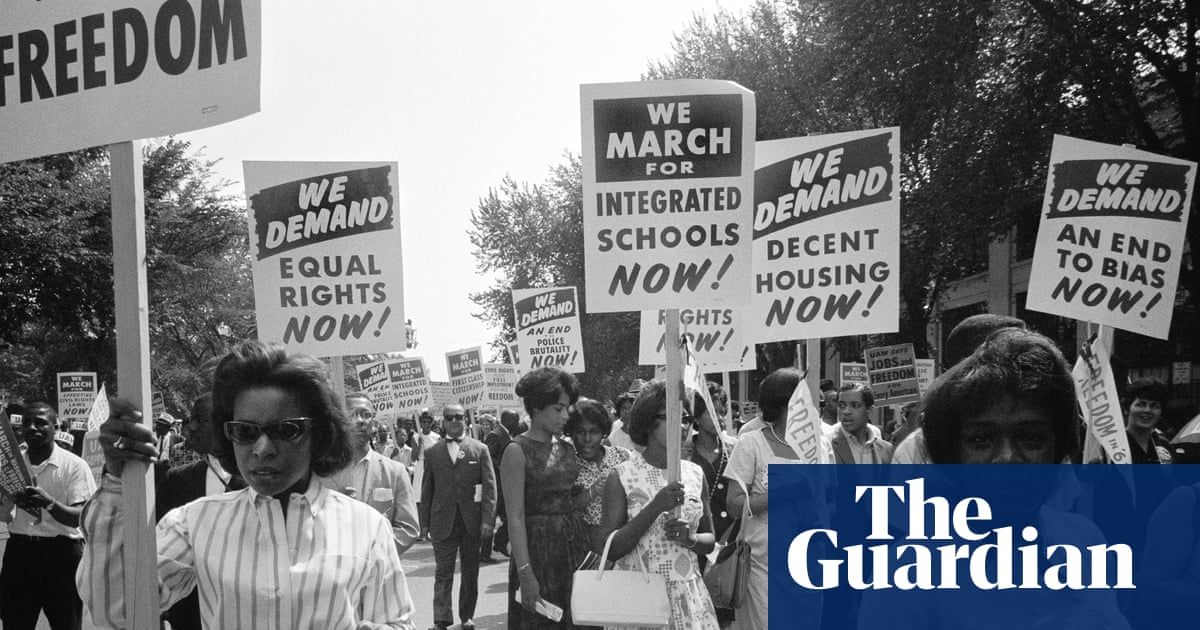
According to the often-cited 3.5% rule, if 3.5% of a population protests against a regime, the regime will fail. Developed by political scientists Erica Chenoweth and Maria Stephan, who researched civil resistance campaigns from 1900 to 2006, the rule has seen renewed interest in leftist circles recently, especially with No Kings protests attracting historic numbers.
…
This shows the outsize impact a single protester can have, the study’s authors say. That’s because having one more attender at a demonstration rallies more support for a political cause than acquiring one more vote during an election does.
…
In the context of civil rights, the movement’s ability to elicit violence from its opponents – such as in 1965, when armed police violently attacked peaceful protesters crossing the Edmund Pettus Bridge in Selma, Alabama – only strengthened public support for the cause. “When the state is perceived as engaging in excess use of force, that tends to generate very sympathetic coverage, and that drives concern,” explained Wasow.
The amount of people on fedi who rage against protests for being useless displays will never cease to confuse me.
people don’t understand that part of a successful movement is accumulating enough critical mass to make your actions more direct. the first step, really, is convincing people they’re not alone in seeing the problem. you do that by getting in the street and saying as loud as you can that there’s a problem. that’s why fascists always crack down on public displays of dissent. it breaks their narrative that they are in full control and that if you see a problem, the problem is with you.
while you are there, you will be surrounded by other people who, like you, see the problem. exchange contact info. these are your new cooperative as you face off against the problem. talk to each other. what groups are you part of, what recruitment opportunities do you have outside of protest, what things do your groups need more of? this will become the backbone of mutual aid as your groups coordinate to assist each other in meeting the problem.
from here your movement will become more dynamic and more equipped to meet the problems, and the authorities you face will have less control over you. eventually, you will have stripped enough power from the authority that you and your coalition will be able to fight back more and more directly against the authority as it directs more and more powerful assaults against your solidarity.
the greatest power you have though is faith. not faith in others, not faith in god, not even faith in any kind of higher power, just faith in that better things are possible. we know that they are because we study history. a consistent theme of pre-colonial societies is that they viewed themselves as post-hierarchy (not universally, obviously). further, we are currently turning to fascism, and fascism has never survived long because it’s a really stupid way to run things. so we know that better things are possible even if all the faith we can muster for that is remembering when things were better than they are now.
but that last statement is the killer. we will have to coalition build and work with people who think returning to how things were before fascism will be good enough. it won’t be. liberalism consistently leads to fascism. the better way forward is not to return to the way things were, but to push for systems that protect us from fascism. of particular interest to me right now are pre-colonial histories of the Nez-Perce, Taino, and Hawai’ians
Especially when protests are how affinity groups are made.
People usually don’t just go from the couch to getting an AK and marching on the capital unless something drastic happens. The goal of all tyrants is to minimize the odds of that happening. Protests are a form of escalation. It increases buy in and majesty the protestors feel they have increased odds of actual support should things escalate. It’s the staging ground from which escalation occurs.
The blm protests each began peacefully and most remained so. They didn’t get everything they wanted but they did demonstrate a capacity to change narratives and to force opposition to expend resources to counter those narratives. The biggest failure there is that there wasn’t significant pushback to the pushback.
That’s a completely reasonable take, but the article (and most of the comments here) aren’t arguing that; they’re arguing that protests on their own are are likely to lead to political or social change and therefore further escalation is not necessary, which is of course complete baloney. Now back to reality, what does your argument say about protests in America right now, where no significant escalation has occurred since April (save for that week or so period in Los Angeles back in June)?
A record number of officials are not seeking reelection, Democrats are winning or nearly losing in Trump-winning districts, and Republicans are starting to join with Democrats on Epstein and anti-tariff legislation. If you think protests in no way contributed to these things you’re as delusional as MAGA.
Why would I think protests contributed to these things? The simplest explanation would be that Trump just pissed a lot of people off, but more importantly these are surface level gains that don’t matter in the long run. Trump is building up a fascist dictatorship and you’re here bragging about tariff laws. Hell, 50% of project 2025 has already been implemented and there’s still more than a year before Congressmen elected in the midterms take their seats.
There are less brown people in the US.
That’s a MAGA win…
Now how many of those Democrats are demolishing deathcamps?
How many more deathcamps have been created since your protests?
How many death camps have you stopped from being formed? You should share your experiences and methods.
Last time I did, your moderators silenced me.
You protest for fascists, not liberate.