

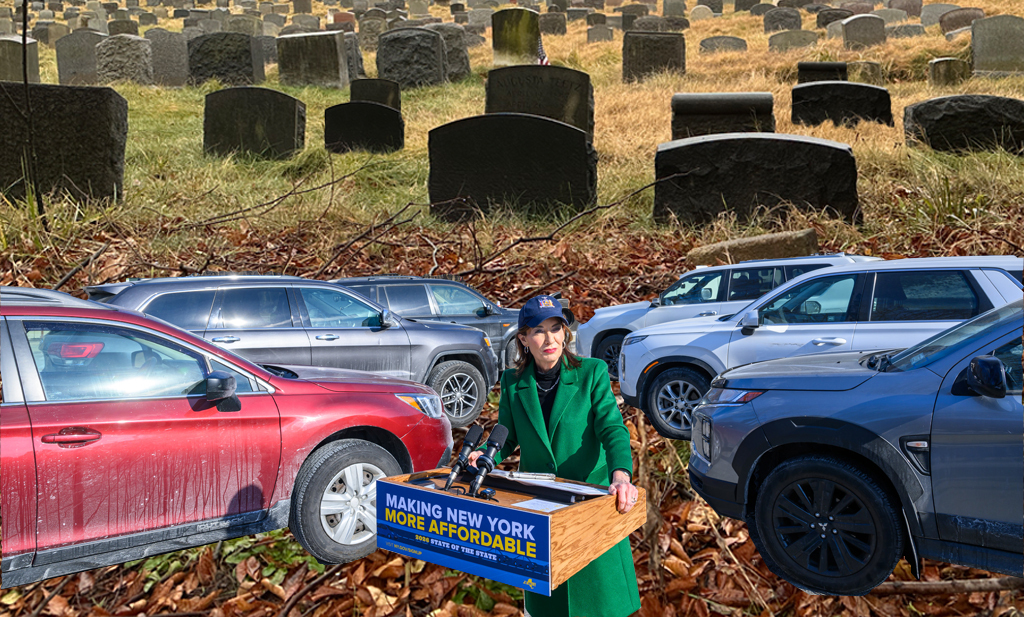
Drivers: Don’t allow insurance companies to use speed camera data. We don’t want bad drivers to pay more.
Also drivers: Insurance premiums are too expenvie. Do something.
Governor: 🙆
Drivers: Don’t allow insurance companies to use speed camera data. We don’t want bad drivers to pay more.
Also drivers: Insurance premiums are too expenvie. Do something.
Governor: 🙆
That’s not what I said or meant.
For an individual, yes.
But how does an insurer do that? By pooling the low chance risk from lots of individuals into a certainty, so it’s predictable. The bigger the pool the more predictable things become.
If there was only one person in the world who wanted insurance, nobody would know how to predict or price it. It wouldn’t work.
Again. You are confusing purpose with implementation.
The purpose is what I stated. The implementation is irrelevant. You claim that insurance is insurance only if it is implemented the way you explain. However, as I tried to explain, you can provide insurance without having a large pool of insurers.
Look at this example:
Alice has a tomato farm and wants to buy a goat from Bob. They reach a price of 20 tomatoes for a goat.
However, they live in different villages. Alice pays 2 tomatoes to Charlie to pay for transport. But Alice is worried that bandits will steal the tomatoes or goat from charlie while the transportation is happening.
So Charlie offers Alice this deal: “give me 4 tomatoes instead of 2, and you will receive a goat, even if the goods get stolen in transport”.
That is insurance.
Why can Charlie offer such a thing? That’s just the implementation, it doesn’t matter. But here are a few possibilities:
About your last claim:
Nobody “knows” how much insurance is worth. Insurance companies pay lots of money to obtain data and make calculations about predictions. But it’s all statistics. The more data there is, the more accurate the price can be. Companies that make good predictions stay afloat, while bad predictions makes them lose money.
But that goes for absolutely every product. There is no global entity that dictates the prices of products as an absolute fact.
You cannot have an insurance company with a single regular customer the same way you cannot have an iphone shop with a single regular customer.
But the concept of insurance is not only for insurance companies.
You can sell a single instance of insurance to a single customer like you can sell a single instance of an iphone to a single customer.
You can see at what price others are selling similar insurance policies and set your price like that. Or you can set the price with a big benefit margin to compensate for the higher risk you are incurring when selling insurance while having little data.
I never said purpose. You did. Originally I said “the point of insurance”.
What you describe is no different than two people making a bet. Making a bet isn’t insurance.
Insurance is different only because of the large organization on the other side making countless bets at scale.
It’s almost as though you’re refusing to consider the larger context, because:
My claim was predicted on nobody else in the world wanting insurance. Insurance companies wouldn’t exist. The concept of Insurance wouldn’t exist. That research and data wouldn’t be done. For that first person and whoever is on the other side, it’s still just a bet.
See what I mean. You’re leaving out the larger context.
Point, purpose, whatever. They are synonyms.
Look, you said you didn’t understand insurance. I tried to explain to you that the reason you don’t understand insurance is because you are wrong about your definition of insurance. If you fixed how you define “insurance” to make sense with how the rest of the world uses it, then you would have a much easier time understanding insurance.
But you refuse to change your definition of insurance. That to me signals that you’re not trying to learn, you just want to argue.
If that’s the case. Fine, let’s argue. But it is hard to argue about something if each of us have a different definition of what that something is.
Yes, you could see insurance as a bet. When giving insurance, you are betting that the insurer will be lucky. But since you have to make a profit, you have to obtain more than the expected value. It is not much different than a casino.
If you bet on a coin toss at a casino and win, you wouldn’t get 2x your offer, you might only get 1.9x. That 0.1x is the casino’s profit.
If your house has a 50% chance to lose all value in the next year, your insurance payment must be higher than 50% of your houses value. If it is 55%, then that 5% is the insurance companies’ profit margin.
If there is no data because nobody has ever been insured, then you just make an educated guess with a low confidence score.
So the last example has a high confidence that it’s a 50% chance results in 55%. Let’s say you eeucately guess that the chance is 20-80%. The middle point of your guess is still 50%, but due to the low confidence, your margin would need to be higher. In this case, they payment might be 70% instead of 55%.
Now you see why insurance companies need all that data. Higher confidence means lower prices without risk increase, or the same prices with a lower risk. Lower prices allow more market share, which results in more money.
If it were as you said, why would they even need to make predictions? Just adjust the rate according to the pool size. “Oh no, last month was really unlucky and the money pool shrank, we’ll increase prices this month”, “nice! Last month was lucky and the pool increased, we can lower the price”.
As I said, there are many ways to implement insurance.