It gets even more disturbing, though, when you realize how far $5000 would get you in 1946 and how little it gets you now.
Context: when my dad was a teenager, he bought a brand new car for well below $1000.
And my grandparents’ first suburban house cost about $7000, and that was in New York, near the city.
As I understand, cost inflation in the US is insane compared to just about anywhere in the world, and even within the US there are vast variations. The most expensive European cities are roughly on par with “medium cost of living” US cities, while “high cost of living” is disproportionately more expensive.
You can get a mansion for the same rent in most of Europe as a New York flat. There is basically no easy way to compare wages and costs because people in the US have to spend on a lot of stuff Europeans pay for via taxes.
$5,000 in 1946 is worth $83,000 today, according to the first inflation calculator I found. Our dollar has ~6% of the purchasing power a 1946 dollar had.
Yea, such comparisons should be done in units like “% of average worker salery”.
Not saying that their argument is wrong and things are way better now, I just don’t like absolute value comparisons over such distances.
While the numbers show that $5000 inflation-adjusted is more achievable now than in the past, I suspect most of that progress was made in the 25 years immediately following then. Also, the numbers are per household, and a lot more households have multiple wage earners now.
Dentist’s notoriously ride 12k carbon bicycles, to the point thats its a meme. The type of bike that bike ships put in the display window to get most people to come in and buy the common 2k ones.
The running joke in biking circles is that when you see someone in full lycra on a very high end bike, its a dentist fresh from the tooth mines.
The above prices arent something you will see in a bike shop. Entry level bikes from large brands run around $800-1200 or so in my area. The common price for “good” bikes at my local shop range from 2-6k. Add 1-2k for electric versions.
$150 for a bike is walmart pricing. These are commonly called “BSOs” in cycling circles, i.e “bike shaped objects.” The components, from the frame to brakes to wheels/etc are all either no name or wildly shoddy, and arent assembled by bike mechanics, so they often aren’t put together correctly. They generally aren’t recommend for safeties sake.
Dentistry is one of the few professions that leaves you the free time and money needed to get into cycling as a midlife crisis and the stereotype is that a lot of MAMILs (middle aged man in Lycra) are dentists.

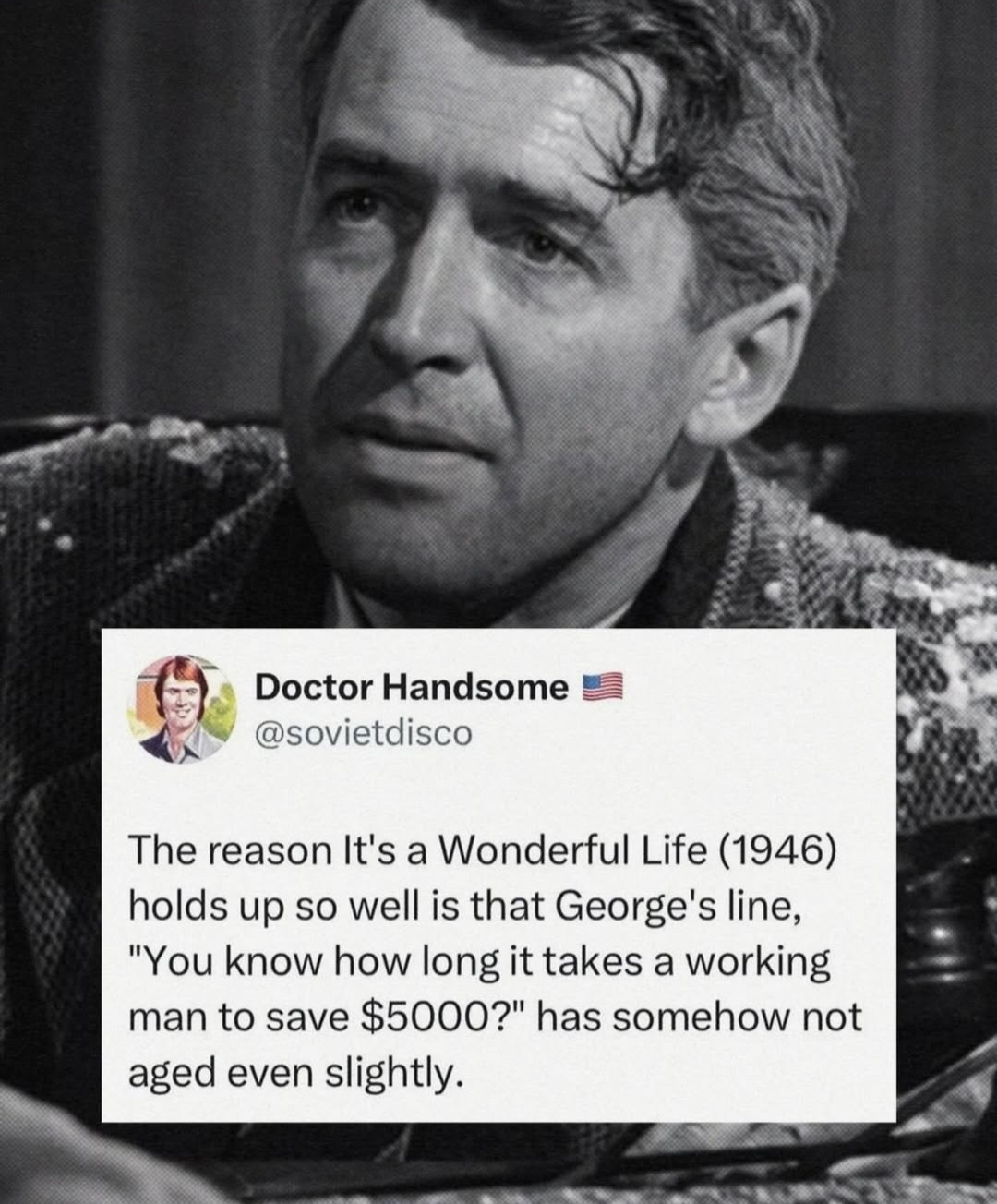
Absolutely true.
It gets even more disturbing, though, when you realize how far $5000 would get you in 1946 and how little it gets you now.
Context: when my dad was a teenager, he bought a brand new car for well below $1000. And my grandparents’ first suburban house cost about $7000, and that was in New York, near the city.
What would $5000 get you today?
A junker used car OR two months rent.
I hope this won’t result in an exasperated and no doubt justified rant, but is that really true on average?
Assuming $/€ roughly translates 1:1, €2500 rent would be for a large flat in an expensive city, at least for the 2 EU countries I’m familiar with.
Similarly, €5000 would get you a well used car, but definitely more than a junker (which could be had for under €1000).
As I understand, cost inflation in the US is insane compared to just about anywhere in the world, and even within the US there are vast variations. The most expensive European cities are roughly on par with “medium cost of living” US cities, while “high cost of living” is disproportionately more expensive.
You can get a mansion for the same rent in most of Europe as a New York flat. There is basically no easy way to compare wages and costs because people in the US have to spend on a lot of stuff Europeans pay for via taxes.
$5,000 in 1946 is worth $83,000 today, according to the first inflation calculator I found. Our dollar has ~6% of the purchasing power a 1946 dollar had.
Yea, such comparisons should be done in units like “% of average worker salery”. Not saying that their argument is wrong and things are way better now, I just don’t like absolute value comparisons over such distances.
Median average salary in 1947 was $36,000 [1]A value of $5,000 then would represent 13.8% of that median salary.$86,000 today (the inflation adjusted amount of $5,000) represents 102.7% of the current median salary of $83,730 [2]
Edit: I can’t read, see below for the correct maths
Or put another way:
1.5 months of work vs 1 year of work.
The first link says the median salary was $3000 not $36000. So $5000 would represent 166.7% of that salary.
You are in fact correct, I put my misreading down to too much Christmas spirit.
While the numbers show that $5000 inflation-adjusted is more achievable now than in the past, I suspect most of that progress was made in the 25 years immediately following then. Also, the numbers are per household, and a lot more households have multiple wage earners now.
Where did you get that? That’s not what your link says at all. $36k was the median salary around 20 years ago, not 80 years ago.
You are in fact correct, I put my misreading down to too much Christmas spirit.
Average means nothing, the rich shift the average.
At least use the median or even better the minimum wage as standard.
Thats why I wrote “average worker”, which excludes the rich. But median is also good.
A mid-level dentist bicycle
What is a dentist bicycle?
Dentist’s notoriously ride 12k carbon bicycles, to the point thats its a meme. The type of bike that bike ships put in the display window to get most people to come in and buy the common 2k ones.
The running joke in biking circles is that when you see someone in full lycra on a very high end bike, its a dentist fresh from the tooth mines.
People buy 2k bikes? Those are pretty high end, common ones would be 150 or 800 if electric.
What currency/country? Certainly not U$D.
The above prices arent something you will see in a bike shop. Entry level bikes from large brands run around $800-1200 or so in my area. The common price for “good” bikes at my local shop range from 2-6k. Add 1-2k for electric versions.
$150 for a bike is walmart pricing. These are commonly called “BSOs” in cycling circles, i.e “bike shaped objects.” The components, from the frame to brakes to wheels/etc are all either no name or wildly shoddy, and arent assembled by bike mechanics, so they often aren’t put together correctly. They generally aren’t recommend for safeties sake.
You clearly aren’t a mountain biker. 🤣
the horn goes tooth tooth
Casually Explained: Cycling
Dentistry is one of the few professions that leaves you the free time and money needed to get into cycling as a midlife crisis and the stereotype is that a lot of MAMILs (middle aged man in Lycra) are dentists.
Source: commuter
Or a low-level dentist appointment
Things explode when people get hungry en masse. I don’t think the US are too far from that, maybe a decade or so