
only if you want to…
I enjoy much of DW’s output, but this article is skirting real close to “Have millenials destroyed the TV industry?”. I know its not exclusively targeted at one age group, but I miss those articles so it’s nice to feel young again.
Yes, there is dumb ‘backgroundable’ TV, but it’s not new and I don’t really think Netflix has changed it either. ‘Bones’ from 2005 just arrived on Netflix and requires zero attention or brainpower, with a lot of key plot points repeated and time filler scenes that don’t really move the plot forward but do serve to make viewers feel they’re in the room as parasocial flies on the wall … and this is a 20 year old series from FOX. I’m not clear on why Netflix deserves singling out, especially when they still make a lot of good drama like His & Hers which recently debuted and is not designed to be backgrounded - I watched fully engaged and enjoyed it.
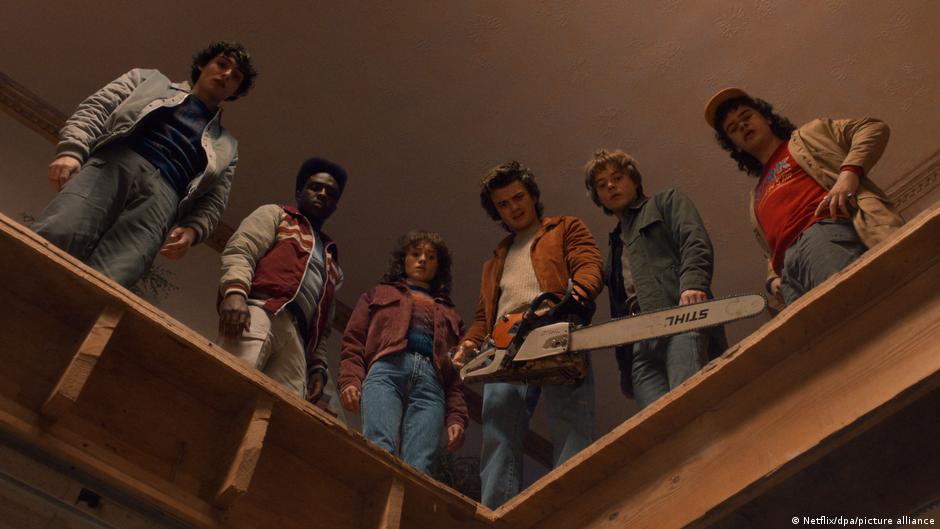
I felt like the article writer also didn’t really watch the last season of Stranger things before throwing this shade, or maybe… was ironically dual-screening - because I don’t agree with the below statement at all…
Much of “Stranger Things’” early appeal was visual: the clothes, the sets, the cheesy-but-cool special effects, the epic fight sequences. By its final season, much of that had given way to characters sitting around explaining what they’re about to do, while rehashing plot points the audience has already seen.
On the subject of wardrobe, set design, time-accurate set dressing, special effects and fight sequences - they were all there and all the same quality from the earlier seasons IMO. While you can accuse its writing direction of being less focused than prior seasons, and plot being recycled (not repeated), that’s really more on the Duffer brothers stretching a 2-3 season story to 5, and running out of steam - also, Covid hit the production which no doubt had an impact on the quality. There also wasn’t so much ‘sitting around explaining the plot’ as there was a big parallel story arc (C or D plot) about Will coming out that mirrors the real life actors coming out… sure that’s kind of them to put into the story and dedicate so much runtime to, but man was it boring. Likewise Nancy and Jonathan’s story arc about their relationship which likewise mirrored the real actors forming a relationship, maybe some enjoyed it but I found it dreary and emotionless. Is this the fault of Netflix or their audience, or the writers - for me, the latter.
So is Netflix making us stupid?
Yeah. But so is every TV network / service, and they’ve been doing it forever.
Ironically, shows that do what they describe are the reason they end up in the background while I’m doing chores. It’s a chore to actually sit and watch because of how much is repeated. They’ll never be more than mediocre media because of it. But that’s fine. Not everything has to be best picture quality. It gives me options depending on what I’m doing.
While I don’t disagree with the crux of the article, I find it really strange to single out Netflix. There are a ton of outlets following similar patterns. The biggest offenders aren’t even traditional media, but social media.
It’s focused on more and more of their content being built around distracted/“second screen” viewing.
Which is fair I think.
But I agree with you that it’s more a case of Netflix just following the trend, not setting it. Netflix have had a few standout hits that can be seen, the big movie example given is K-pop demon hunters, however I would counter that by saying given its nature as a musical style movie that heavy exposition in and out of songs is more warranted.
As someone who’s been watching TV since the 80s, no, this is not Netflix’s fault.
Sure, exposition has always been a thing, especially in low-effort media. But I would say movies and TV are at a historic low-point in visual storytelling. For a growing portion of it, the picture might be pretty to look at, but it’s not where we get any important information about the plot. I’m not saying it’s good or bad, but it’s definitely become a feedback loop.
My wife works from home. She’ll frequently put an amazing movie on in the background while she works, then say the movie was “just okay” and never watch it again because she’s “already seen it.” Why would any producer waste their effort on the visual part if half the audience isn’t watching?
and Netflix’ algorithms — capable of tracking, down to the second, when viewers tune out or drop off — have drawn a blunt conclusion: their audience is distracted, and the content should accommodate that distraction
How do they do that? Wouldn’t netflix normally be playing on a separate device than whatever you’re using for distractions?
They do something called making thier movies “second screen friendly” which essentially boils down to restating the plot multiple times so an audience who isnt focused can hop back into the movie at any point without feeling lost.
Yeah, I get that part, I’m just wondering how exactly they are collecting the metrics they are using to justify it, when it doesn’t seem like that data should be so easy to get.
I haven’t watched many Netflix productions recently, but I agree this is very noticeable in those that I have seen. Two of the most egregious in recent memory were Stranger Things and Wednesday. Interestingly, both are shows aimed at a young adult audience (although Stranger Things didn’t start off that way), as opposed to something like Adolescence. I wonder if there’s a connection there.
Netflix is not the problem here, though, just a symptom of/reaction to it. The problem is smartphone addiction.
Nah man, it’s tiktok and Instagram shorts making us stupid.
There has always been dumb media, it just tends to be forgotten. Survivorship bias makes us remember the past in an undeserved light.
Nah, it’s just meeting people on their level to stay afloat.
Social media forces high-profile posters to be formulaic.
Music has been formulaic for a century.
Netflix isn’t the problem, it’s just one of the bigger parts of the problem.